Same Facts, Different Stories
Football, grief, autism, billions and the myths humans use to make sense of the world


The stories we tell ourselves
Football, Social and Medical Models
Fragment Memoir: Tao of Glass (theatre), Ghost Stories (writing)
Trail of Tears Beans
Losing Billions
This letter looks at the stories and myths humans tell to make sense of ourselves. Where we use the same facts to tell different stories/myths. I weave this idea across football, medical models; the fragmentary memoir of Siri Hustvedt; the fragmented theatre of Phelim McDermott; and this week the winning and losing of billions in AI investments by Leopold Aschenbrenner, who has been on my podcast. Plus quick hits and my podcast with Soumaya Keynes on Trade wars.
The stories nations play. If you are at all curious about human flourishing or the human condition then you ignore football to your disservice.
At the level of numbers it is the largest human sport and so in terms of culture it moves continents and nations. Of note, the two most powerful human nations, China and the USA, are not the most powerful footballing nations. Smaller nations get to play out their stories on the global stage.
At the level of men vs women, you could read football as an expression of the patriarchy. Generously, this expression is less violent, more collective than ever before. That is what Alice Evans argues here. She also argues that football still is a violent expression.
Still better in football than in hot wars, one can argue. You can read the story of football as a better alternative to war and a sport of declining violence. Or you can read the story of football as still an expression of celebrated male violence, of cronyism and inequality.
At the the level of a nation there are many stories we can pretend to ourselves.
One story of Spain is that the Spanish team is a system, it is a collective expression of a style and a way of playing that relies on the collective more than the individual. (Arguably rooted in Dutchman Johann Cruyff’s tenure in charge of Barcelona / Catalonia; Total Football → tiki-taka: Rinus Michels and Cruyff’s Ajax/Netherlands → Cruyff’s Barcelona → Guardiola’s Barcelona → Spain under Luis Aragonés and Vicente del Bosque)
Yamal’s story may be one of immigration and rising from poverty. The style an aesthetic expression of team passing.
One story of Argentina is that the team collective circles one man, Lionel Messi. (The cultural critique might be: the expression also one of barely suppressed violence, that spills over into fists thrown at the end of the game.)
Messi’s style and being himself a story of the possibilities of football. Notably, early Messi himself fits into the Spanish idea of football - when in Spain - more so than the Great Man idea of football. Still, the World Cup Argentina allowed Messia to conserve energy; find critical space and moments; and convert moments into chances. So Spain serve the structure and philosophy; Argentina protects and liberates the star.
[We can create other stories, Barnay Roonay argues: Whereas Argentina, well, what is this exactly? Sport as emotional nationalism. But European-coded too. Nothing expresses Argentina like Argentina’s football. And yet Argentina’s football is hugely cross-fertilised by Europe. Messi, its godhead, could have played for Spain, learned his method in Spain, and has become the apex point of modern European club football.
And I like his description of Messi:
Messi’s super-skill, even in his ferretty, fast-twitch prime, has been all about creating his own moments of calm and stillness…
…even at his dotage at this World Cup Messi has been a delight, still able to dredge up those surge moments where he makes the universe around him symmetrical, soft, open to his touch]
Why the consternation in Britain (or only England?) on the English loss to Argentina in the semi-finals?
Two people can watch the same facts of the game and give themselves a different story.
One story focuses on the attack, the ability to score, the ability to surge forward to be different to how you’ve perceived yourself before.
One story focuses on the defence, the ability to smother and deny, the ability to be stalwart but perhaps to have been no different than before.
One story of English football perceives its history to be boring and centred around defence. There is a desire to be something different from the past. Under this myth, it is better to lose while trying to attack and be something more, than to lose as defenders.
Another myth, is that winning is the main matter. Defence, decent, desire - whatever - it’s the win. Consequence. Non-consequence. Perhaps.
Those of one myth have a certain consternation, anger even when they lose in a manner ill-befitting their story.
That’s one part of the human condition, it seems to me. To explain to those never interested in football and how it relates to human condition. In this myth, it’s not even the losing but the how of losing. And for Spain, it’s not even the winning, but the how is losing. Arguing that the best expression of the world is the team. The myths we tell ourselves.
No person is a model. No model is is person.
Limited eye contact. Finds polyester clothing unbearable. Enjoys constant tiptoe walking. Hates crossing thresholds. Deep interest in types of trees.
One set of facts. The medical model might argue for a label, for diagnosis and through that label and diagnosis, a treatment or understanding to make living in the world easier.
One set of facts. The social model might argue that more important than the diagnosis is having an inclusive and accepting society. A label is only a human construct. A human myth.
No model is a person. Humans understand themselves and each other by the stories and myths we construct for ourselves and each other.
Siri Hustvedt has written Ghost Stories. The book is hard to categorise clearly. The blurb suggests a patchwork memoir. I was reminded of my readings of Sei Shonagon’s Pillow Book. Its form is intriguing and unusual - a fragment / mosaic / patchwork memoir made of emails, letters, notes and reflections. - and while fascinating, is one of the least of the treasures of the work.
The writing speaks to love, grief and relationships. Our stories to our past selves, our future selves, our selves that will never be again the selves that we forge with “AND” another and what we see in the eyes of another, versions of ourselves.
The writing riffs across medical science, the check point inhibitors at the frontier of cancer treats; social science theories: attachments; neuroscience: the smell hallucinations of grief; the impossibilities and trauma of grief
“ Am I crazy? My Husband is dying and I’m rereading Baldwin”
In Paul, I see a model for how to die. His translation of Jopubert “One must die lovable (if one can).” He is dying lovable for us. The struggle of the single individual, which is also to love and to open oneself to the joy and terrible burden of that love. He is doing it.
I’m still iterating my own show on death. I glibly announce on occasion I’m the only person I know who has been to their own funeral 15 times.
I recommend the book as moving, insightful and at the frontier of what life writing is and can be at the moment.
That said, I think if you’ve been recently close to death and grief this may be too much unless you have the impulse to share what cannot be shared - that grief - but to share the want of sharing - that phrase is hard to make sense of until you come close to grief or those grieving, I think.
Still, with a little more distance - this patchwork of moving / observed / insightful / loving / grieving will give an intense sharing - maybe haunting - maybe hopeful - view of an end of life and an end of a long relationship - and a glimpse of family and the future.
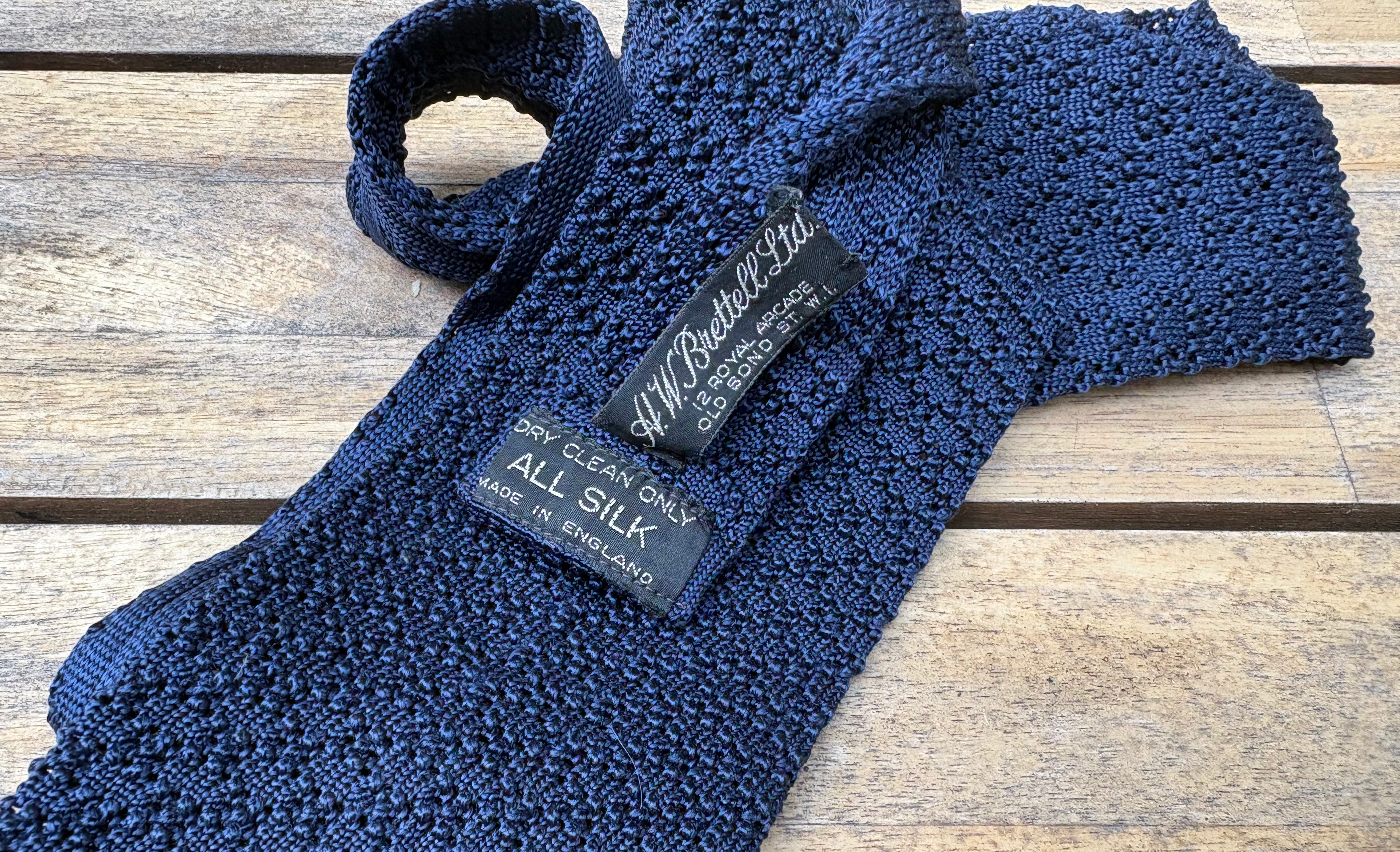
There is this knitted silk tie. Made in the 1960s in England. It belonged to my father.
Some days, it’s a slightly unusual tie to wear with a suit to look like your audience expects; to express an aura of credibility and acknowledgement of your audience’s tastes.
Some days, it’s a memory of my father that carries the weight of time and expectations; loss and longing; performance and art.
Same item. Different myths. Objects accumulate stories.
I experienced Phelim McDermott’s Tao of Glass at Soho Place theatre. The performance is hard to categorise. A performance patchwork memoir. A story telling tapestry. The tapestry is on the frontier of what theatre making can be at the moment.
The show riffs on shows never made; the ghosts of shows, past and present; the meaning of theatre; where music - where creativity - and art - comes from; its changing notions; a river, a place; ghosts of people; deep democracy; what comas and near death might mean; what failure and broken might or might not be; kintsugi and to be kintsugied.
And of course the river of Philip Glass music.
And so, to my mind from a very different place the Tao of Glass touches the myths and stories that Ghost Stories do -
I highly recommend the show but I appreciate that like Ghost Stories, it may not touch your own myths. (link to show)
Money generates its own myth, while being a myth itself.
I once podcast with Leopold Aschenbrenner, in 2021. Leopold was not many weeks post graduating valedictorian of Columbia University, aged 19.
In 2026, Leopold is a hedge fund manager. For much of 2026, Leopold made billions of dollars on investments related to AI. In this week, at the end of July (the week before his wedding), he lost billions of dollars. Commentators across social media and newspapers have views.
There are facts. Billions up. Billions down. A portfolio of shares sold from one fund to another fund.
Two people reading those facts can and do make very different myths.
In our garden, we have managed to grow two beans. I might have planted them in soil. I and others might have watered them. The sun’s energy might have made them grow.
These are possibly the facts and stories about the bean.
The Cherokee Trail of Tears bean memorializes the forced relocation of the Cherokee Indians in the mid-nineteenth century. They carried this bean throughout this infamous walk, which became the death march for thousands of Cherokees; hence the ‘Trail of Tears.’ In the face of its poignantly dismal history, the shiny, jet-black seeds are used with pride in many traditional American Indian dishes. The seeds are encased in six-inch, greenish-purple pods. These small attractive beans are dried before being consumed, and have a delicious rich flavour. (Ark of Taste)
One Story has seeds in the ground, a story about growing food. Another story has the memory and history of the seed collected and remembered.
Elsewhere…
“The trade wars are coming to us, and we’re going to have to engage.”
I had an excellent chat with Soumaya Keynes. Where we chatted through what a trade war means; defence and attach; and what smaller nations can think about doing.
We also had a song:

Quick hits:
Entrepreneurs in UK?


Feynman letter


Notes on beauty:


AI solves more hard maths problems

